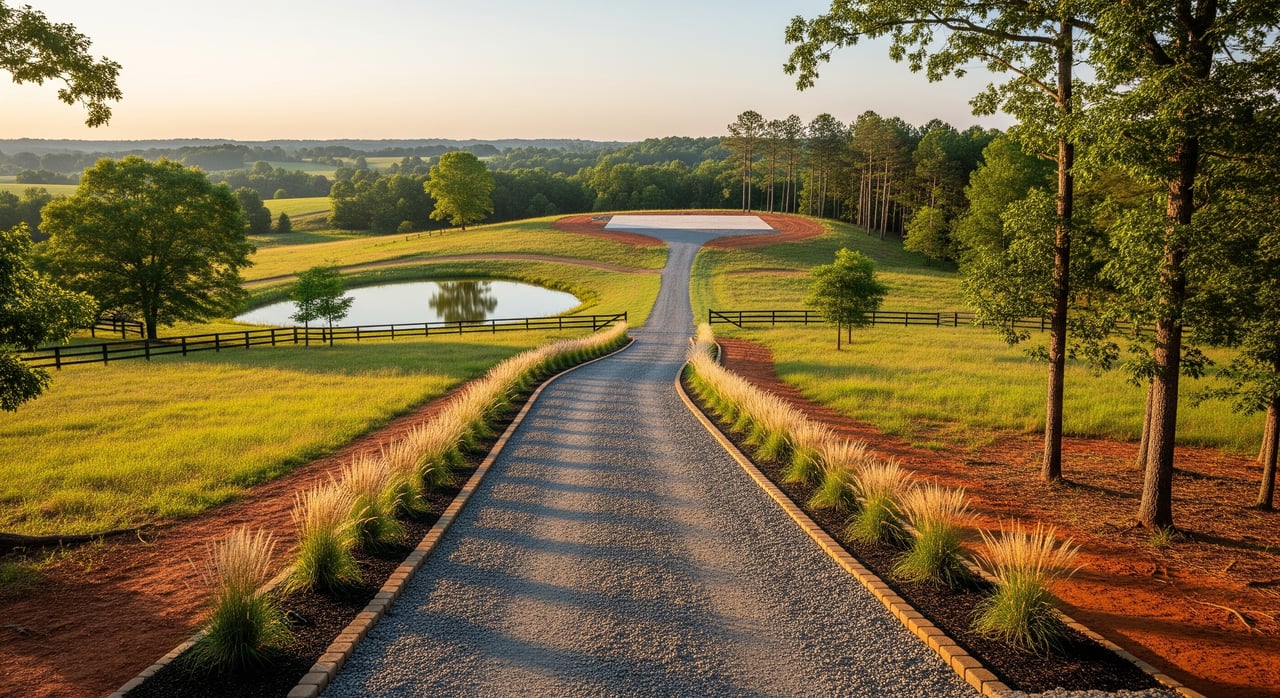
Looking at a piece of land in Climax and wondering how to pay for it? You are not alone. Financing land here works differently than buying a house, and the details can make or break your deal. In this guide, you will learn the main ways to fund a lot purchase in Randolph County, what lenders expect, the due‑diligence steps to protect your plans, and where a local agent can help you move faster. Let’s dive in.
Why land financing is different
Buying land in Randolph County often involves wells, septic systems, and private road access. Lenders focus on buildability, which means things like soil conditions for septic, road frontage or recorded easements, utility availability, and floodplain or stream buffers. Climax is unincorporated, so permitting and approvals run through Randolph County offices such as Planning and Zoning, Inspections, and Environmental Health.
Because land is riskier to finance than a home, expect higher down payments, shorter terms, and rates that are often above a standard mortgage. Your path to financing will depend on whether the parcel is raw or improved and how soon you plan to build.
Your financing options in Randolph County
Cash
If you can buy with cash, you will have the strongest negotiating position. Cash lets you move quickly, skip lender requirements, and often improve price and terms. The tradeoff is tying up capital you might use for construction or other investments.
Local bank portfolio land loans
Community banks and credit unions that keep loans in-house can be flexible on unique parcels. Typical patterns include:
- Down payment: about 20 to 40 percent for improved lots, and 30 to 50 percent for raw land.
- Rates: usually higher than standard mortgages, sometimes 0.5 to 3 percent above.
- Terms: often 5 to 15 years, sometimes with interest-only periods or balloon payments.
These lenders look closely at access, septic feasibility, and resale potential. This option fits buyers who want a stand-alone land loan and value a lender familiar with Randolph County parcels.
HELOC or cash-out refinance
You can leverage equity in your current home with a HELOC or a cash-out refinance. HELOCs are revolving lines with variable rates and interest-only draw periods. Cash-out refis replace your current mortgage with a larger loan and give you cash at closing. These options often carry lower rates than land loans since they are secured by an improved property, but they put your home at risk if you cannot repay.
Seller financing
Some land sellers will carry the note. Down payments can be negotiable and sometimes lower. Rates vary and many deals include a balloon payment after 3 to 10 years. This can be a fast and flexible route when traditional financing is tough or the parcel is unconventional. Make sure an attorney prepares or reviews the promissory note, deed of trust, and any restrictions.
Construction loans and one-time-close options
If you plan to build soon and have a builder and plans, a construction or construction-to-permanent loan can bundle land and build financing. Lenders release funds in stages as work is completed, and the loan often converts to a permanent mortgage after the home is finished. Underwriting is stricter and documentation-heavy, but it consolidates your financing.
USDA and specialty programs
USDA Rural Development programs primarily support owner-occupied homes. Stand-alone raw land purchases are typically not covered, though some construction or combo options may exist if you meet geographic and income rules. FHA and VA usually do not finance raw land on its own. Check eligibility early if you plan to build a primary residence.
What lenders look for in Climax
Lenders judge land on how usable and marketable it is. The factors below can improve terms and reduce your down payment requirement:
- Perc test and septic feasibility approval from Randolph County Environmental Health.
- Confirmed legal access by public road or recorded easement, plus known maintenance responsibility.
- Utility proximity and realistic cost to extend power, water, or broadband if needed.
- Zoning that allows your intended use, and no floodplain, wetlands, or unstable slopes that block a build.
Typical land-loan patterns include:
- Down payment: 15 to 30 percent for improved lots and 30 to 50 percent for raw land.
- Rates: higher than residential mortgage rates, with exact spreads set by lender and market.
- Terms: often 5 to 15 years with possible balloon payments.
- Credit and income: stronger credit scores and standard income documentation help. Investors may face stricter terms.
Appraisals, title insurance, and in some cases environmental reviews are standard. Flood insurance may be required if any portion of the parcel lies in a mapped flood zone and your lender requires it.
Due diligence checklist and timeline
Pre-offer checks
Do these before you make an offer, or include contingencies to protect your deposit:
- Confirm zoning and allowed uses with Randolph County Planning.
- Verify legal access by public road or recorded easement, and who maintains it.
- Request or order a recent survey or plat with setbacks and right-of-way shown.
- Secure a recent soil evaluation and perc test or schedule one with Environmental Health.
- Estimate utility availability and extension costs for power, water, sewer if applicable, and broadband.
- Run a preliminary title search for liens, easements, covenants, and mineral rights.
- Review FEMA floodplain maps and check for stream buffers or wetlands.
- Talk to local builders to estimate construction costs and timing.
Get financing-ready
- For portfolio land loans, speak with community banks or credit unions in Randolph County and ask about their land-loan experience and documentation list.
- If using a HELOC or cash-out refinance, request quotes from your mortgage lender and understand how the new payment affects your budget.
- For seller financing, request a sample note and have a real estate attorney review terms.
- For construction-to-perm, gather plans, a builder contract, and a line-item budget before pre-approval.
A solid pre-approval makes your offer stronger and helps you close on time.
From contract to closing
- Order a full survey if none is available.
- Complete perc testing and apply for septic permit approval if needed.
- Your lender will order a land appraisal. Plan for 1 to 3 weeks.
- Engage a closing attorney for title insurance and document review.
Typical time frames in Randolph County:
- Survey: 1 to 4 weeks
- Perc test scheduling and results: 1 to 3 weeks, sometimes longer depending on season
- Lender underwriting and appraisal: 2 to 6 weeks
- Septic permit and design: 2 to 6 weeks
- Construction loan approvals with plans: 4 to 8 weeks or more
Expect 30 to 60 days to close if permits and approvals are straightforward. If septic design or access issues arise, build in extra time.
Common red flags to avoid
- No legal road access, or an easement that is unrecorded or disputed.
- Floodplain or wetlands that block your intended building area.
- Poor soils that fail percolation testing for a septic system.
- Steep slopes or erosion that make site work costly.
- Unresolved title problems, unpaid liens, or restrictive covenants that limit use.
- Utilities located so far away that extension costs strain your budget.
Insist on a full title search and title insurance. For larger tracts, consider reviewing past site uses and potential environmental concerns.
Costs and carrying considerations
Vacant land often has different tax treatment than improved homes. Your carrying costs can include property taxes, loan interest, title insurance premiums, private road maintenance shares, and any insurance your lender requires. Plan for these costs during your holding period and before construction begins.
How a local agent adds value
Bring a local agent into the process early. Before you make an offer, your agent can line up introductions to community bank portfolio lenders, construction lenders, and mortgage contacts for HELOCs. You can also get referrals to surveyors, septic consultants, closing attorneys, and county contacts who know Randolph County’s processes.
Your agent can help structure contingencies around survey, septic, access, and financing so you do not lose your deposit while you investigate buildability. If seller financing is on the table, your agent can coordinate terms and connect you with an attorney and title company experienced with owner-financed land.
Ready to map a clear path to the right lender, the right terms, and a smooth closing in Climax? Book a free consultation with Marcus Lane to match your financing plan to your land goals.
FAQs
What down payment is typical for land in Randolph County?
- Improved lots often require 15 to 30 percent down, while raw land commonly needs 30 to 50 percent, with exact terms set by the lender and parcel risk.
Can I use a HELOC to buy land in Climax?
- Yes. Many buyers use a HELOC secured by their current home to purchase land, often at lower rates than stand-alone land loans, but your home is the collateral.
How long does closing on a lot usually take?
- Plan for 30 to 60 days if approvals are straightforward, allowing time for survey, perc testing, appraisal, title work, and lender underwriting.
Do USDA loans cover raw land purchases near Climax?
- USDA programs primarily finance owner-occupied homes, not stand-alone raw land, though some construction or combo options may apply if you meet eligibility rules.
What is a perc test, and why do lenders care?
- A perc test shows whether soils can support a septic system. Positive results improve buildability and lender confidence, which can impact loan approval and terms.
Is seller financing common for land near Climax?
- It is an option you will see, especially on parcels that do not fit traditional lending. Terms vary, often with negotiable down payments and possible balloon payments.